

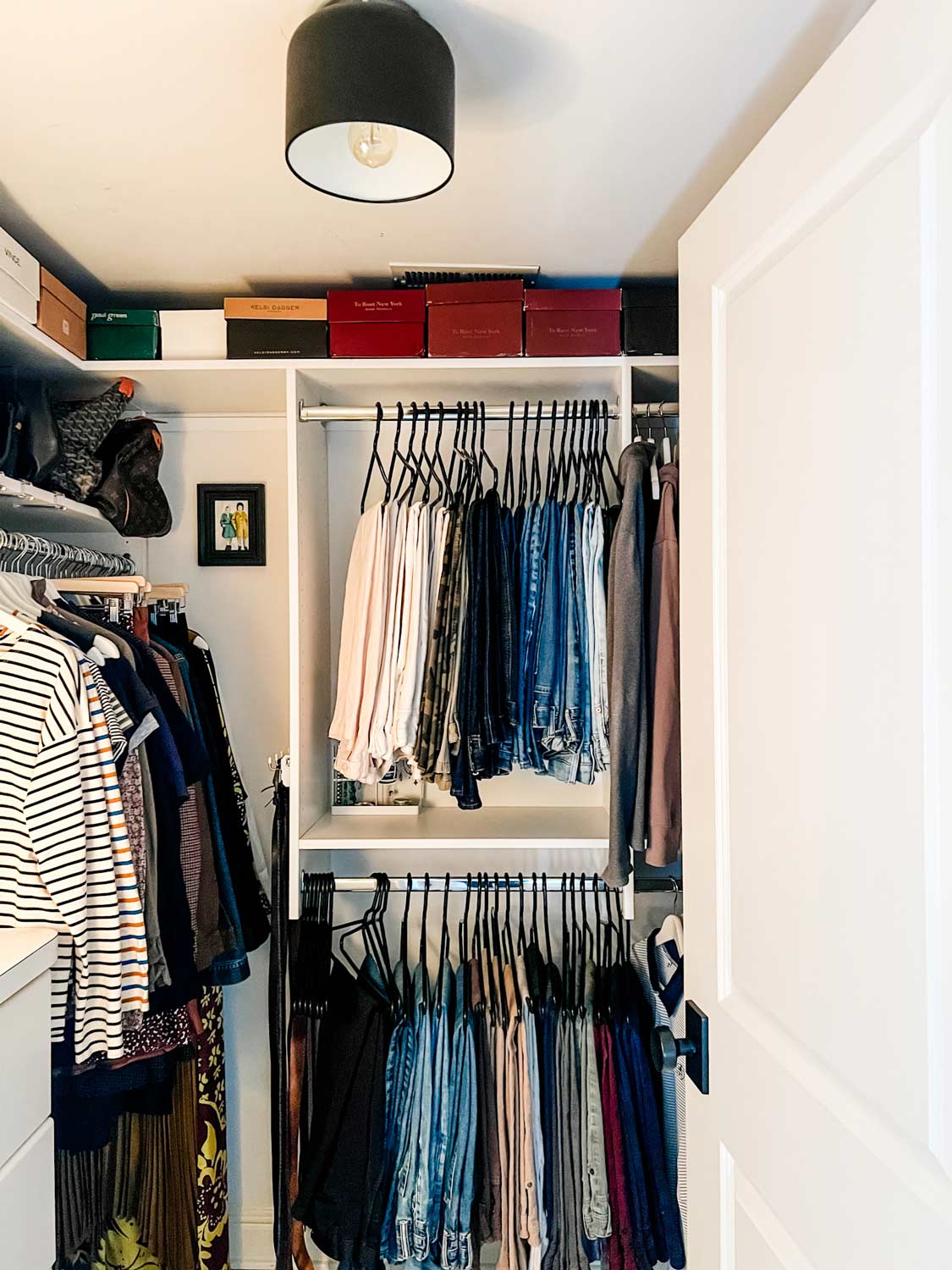
A crowded closet doesn’t always mean you need more storage. Often, it means too many clothes are competing for space even though only a small portion gets worn regularly. Removing forgotten, uncomfortable, or outdated pieces can make dressing faster while giving your favorite clothes room to breathe.
The goal isn’t an empty closet. It’s a closet filled with useful choices.
Why Closets Become Crowded So Easily
Clothes enter a wardrobe gradually. A sale purchase here, a special-event outfit there, and several replacements for basics can quietly turn a manageable closet into an overloaded one.
The problem becomes obvious when hangers won’t slide, folded clothing falls over, or you repeatedly move unwanted pieces to reach something useful. Looking at different personal style ideas can also make it easier to separate clothes that fit your current preferences from pieces connected to an older style phase.
Start With What You Actually Reach For
Think about the clothes you wore during the last month. Those pieces reveal more about your real wardrobe needs than clothes saved for imagined future situations.
Regularly worn jeans, shirts, jackets, dresses, and shoes deserve convenient placement. Rarely worn items should earn their space rather than automatically keeping it.
Sort Clothing by Use Before Removing Anything
Pulling everything out at once can create unnecessary chaos. Instead, work through one category at a time: shirts, pants, dresses, jackets, shoes, then accessories.
Place each item into a simple group such as frequently worn, occasional, seasonal, uncertain, or ready to leave. Browsing broader fashion and lifestyle inspiration may help clarify which pieces still suit the way you dress today without turning the process into another shopping session.
| Closet Group | What Belongs There | Best Action |
|---|---|---|
| Frequent wear | Weekly favorites | Keep accessible |
| Occasional wear | Event or specialty pieces | Keep selectively |
| Uncertain | Rarely chosen items | Review again |
| Unused | Poor fit or unwanted clothing | Donate or remove |
Use Fit, Comfort, and Condition as Filters
An item can be attractive and still be wrong for your wardrobe. Clothing that pinches, slips, scratches, requires constant adjustment, or no longer fits comfortably often remains untouched regardless of how much it originally cost.
Condition matters too. Stained shirts, stretched sweaters, damaged shoes, and worn-out basics shouldn’t occupy prime closet space unless you genuinely plan to repair them.
A wardrobe should support real mornings, not guilt about past purchases.
Give Remaining Clothes More Breathing Room
After removing unnecessary pieces, avoid immediately filling the open space. Let the closet stay slightly under capacity so clothes are easier to see and retrieve.
Organizing by category usually works better than highly complicated systems. Keep shirts together, group similar bottoms, and create a clear section for outerwear. Ideas from everyday wardrobe styling can help you think in complete outfits rather than treating every garment as an isolated purchase.
Visibility matters. If you can’t see an item, you’re less likely to remember it.
What People Often Get Wrong About Decluttering
Throwing away half your wardrobe isn’t automatically successful decluttering. Removing useful basics because they seem boring can leave you buying replacements only weeks later.
Another mistake is keeping uncomfortable clothes because they were expensive. The money has already been spent, and storing an unwanted item doesn’t recover the cost. Focus instead on whether the garment still serves your current lifestyle.
Don’t force yourself toward a specific item count either. Closet size, climate, work requirements, and laundry habits all affect how many clothes make sense.
Frequently Asked Questions
How often should I clean out a crowded closet?
A seasonal review works well for many people, but you can also remove unwanted pieces whenever you notice them. Regular small edits are easier than waiting until the closet becomes difficult to use.
Should I keep clothes that no longer fit?
Keep only pieces you realistically expect to wear again and genuinely value. Clothing saved purely from guilt, pressure, or unrealistic expectations can take up space without adding practical value.
What should I do with clothes I remove?
Wearable clothing can often be donated, sold, exchanged, or given to someone who wants it. Damaged textiles may have local recycling options, depending on the materials and services available in your area.
Build a Closet Around Real Life
A useful closet isn’t defined by how much it holds. It works because the clothes inside fit, feel comfortable, suit your routine, and are easy to find.
Start with one clothing category, remove obvious non-wearers, and observe what remains. When every hanger represents something you would willingly put on, getting dressed becomes noticeably simpler.







Leave a Reply