

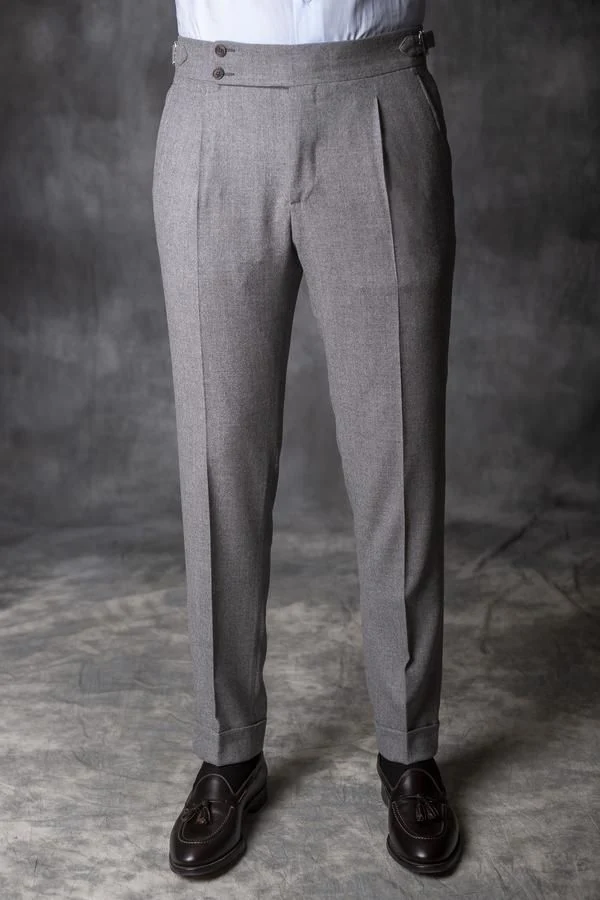
Poor trouser fit usually comes from a mismatch between the waistband, rise, seat, and leg shape rather than one isolated measurement. A pair can fit comfortably at the waist yet still pull across the hips, bunch below the seat, or create too much fabric around the legs. Fixing the overall proportion produces a cleaner result than simply choosing a smaller or larger size.
Start With the Waist and Rise
Check the waistband before judging the rest of the trousers. It should stay in place without digging into your body or requiring a belt to prevent slipping. If you can easily pull the waistband several inches away from your body, the waist may be too large.
Rise matters just as much. A rise that is too short can create pulling around the crotch, while excessive rise may leave loose fabric through the front and seat. People exploring fabric and tailoring references may encounter many construction ideas, but your own body proportions should guide the final fit.
Check the Seat Before Altering the Waist
Look at the trousers from the back. Horizontal pulling lines can suggest insufficient room, while sagging fabric may indicate excess volume.
Changing the waistband alone will not always solve either problem. A tailor may need to adjust the center-back seam or seat area so the garment follows the body more naturally.
Balance the Thigh and Leg Width
Trouser legs should complement the upper portion of the garment. Extremely narrow legs can look strained when the seat and thighs are fuller, while overly wide legs may make a correctly fitted waist appear less balanced.
Garment proportion ideas can be useful for understanding how different silhouettes work together. Still, focus on whether the fabric hangs smoothly from the hip instead of clinging, twisting, or ballooning.
| Fit Area | Common Problem | Better Direction |
|---|---|---|
| Waist | Gaping or slipping | Reduce waistband carefully |
| Seat | Pulling or sagging | Adjust seat shaping |
| Thigh | Tight horizontal lines | Add more room |
| Hem | Excess bunching | Shorten to proper break |
Fix Trouser Length After the Upper Fit
Length should normally be the last major adjustment. Shortening trousers before correcting the waist, seat, or rise can make the finished proportions harder to judge.
Stand naturally while wearing the shoes you expect to use most often. Then decide whether you prefer little or no break, a slight break, or a fuller traditional break. Personal styling inspiration may help when thinking about complete outfits, but trouser length should primarily suit the cut and footwear.
Test the Trousers While Moving
Walk, sit, climb a step, and bend slightly. A pair that looks fine while standing still may reveal restriction through the thighs or crotch once you move.
Good fit allows normal movement without forcing the waistband downward or creating strong tension lines across the fabric.
Common Trouser Fit Mistakes to Avoid
One mistake is buying trousers mainly because the waist measurement works. Two pairs marked with the same waist size can have different rises, hip measurements, and leg shapes.
Another problem is trying to remove every wrinkle. Fabric naturally changes when the body moves. The goal is not a perfectly flat garment at every moment but a balanced shape without obvious pulling, twisting, sagging, or excessive bunching.
Avoid aggressive home alterations unless you understand garment construction. Removing too much fabric from the seat or leg can be difficult to reverse.
Frequently Asked Questions
Why do trousers fit my waist but feel tight in the thighs?
Waist size does not determine thigh room. Different trouser cuts distribute fabric differently through the hips and legs, so a straight or relaxed cut may fit better than a slim cut even when both have the same labeled waist size.
Can a tailor make trouser legs narrower?
Usually, yes. Many trousers can be tapered through the legs, although the amount depends on seam allowances, pocket placement, fabric, and the original construction.
Should trousers stay up without a belt?
Ideally, the waistband should remain comfortably in position without relying completely on a belt. A belt can refine the fit, but trousers that continually slide may need a smaller waist or alteration.
Make Proportion the Priority
Evaluate trousers as one connected garment rather than treating the waist, thighs, and hem separately. Start with the rise and seat, refine the leg shape, and adjust the length last. Small corrections in the right order can make ordinary trousers appear sharper while keeping movement comfortable.





Leave a Reply