

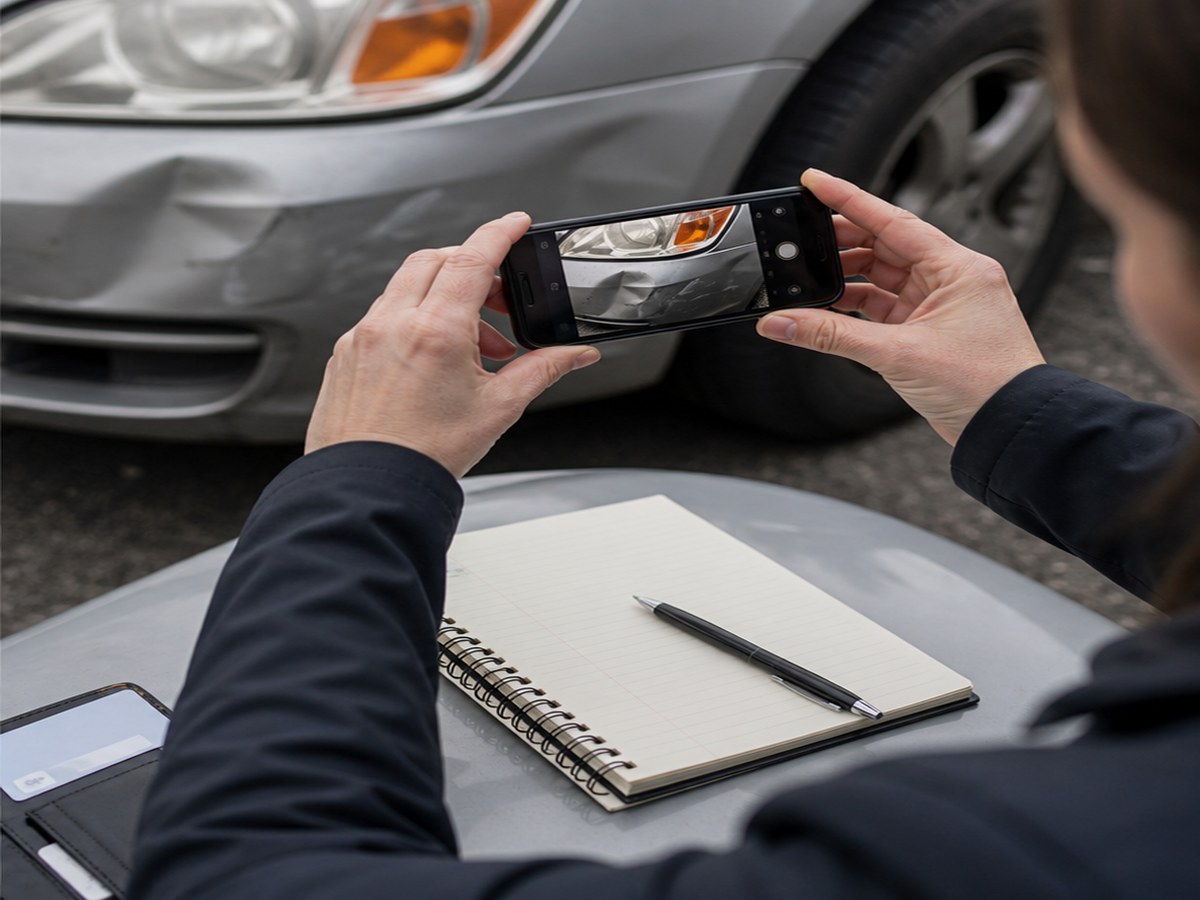
Vehicle repairs can erase useful evidence surprisingly fast. Before damaged parts are removed, painted, straightened, or discarded, create a clear record of what the vehicle looked like after the crash. Good documentation can help insurers, repair shops, investigators, and legal professionals understand the extent and location of the impact.
Why Damage Documentation Matters
A car accident claim often depends on more than showing that a collision occurred. The location of dents, broken components, deployed airbags, shattered glass, and damage to nearby property may help explain how the crash happened.
Negligence claims generally involve questions about duty, breach, causation, and resulting damages. Cornell Law School’s Legal Information Institute explains these basic elements in its overview of negligent torts.
Photographs won’t automatically prove fault, but they can preserve details that may disappear once repairs start.
Photograph More Than the Biggest Dent
Take wide photographs showing the entire vehicle, then move closer to specific damage. Capture all sides, wheel areas, windows, lights, mirrors, airbags, interior damage, and visible debris when it can be done safely.
Keep the original files rather than only screenshots or compressed copies. Original images may contain dates and other file information that helps establish when the photographs were created.
Preserve the Repair Trail
Repair paperwork creates another layer of documentation. Estimates, invoices, parts lists, towing records, storage bills, and communications with repair facilities can establish what work was recommended and completed.
People browsing accident-related legal discussions may encounter broad explanations of injury claims, but the records from the actual crash remain more important than generic online examples. Save documents connected specifically to your vehicle and incident.
| Record | What It Shows | Why Keep It |
|---|---|---|
| Damage photos | Condition before repair | Preserves visible evidence |
| Repair estimate | Planned work and parts | Documents expected costs |
| Final invoice | Completed repairs | Shows actual expenses |
| Tow/storage bill | Post-crash handling | Supports related losses |
Keep Records Connected to the Accident
A claim file should extend beyond the automobile itself. Keep the police or crash report if one was prepared, witness contact information, insurance communications, rental-car receipts, medical bills, and proof of missed work when relevant.
General legal publishing resources can provide background reading about civil claims, but different injury cases follow different legal rules. A car crash should be documented according to its own facts rather than treated like another type of lawsuit.
Avoid deleting emails or text messages involving the accident simply because the insurance claim appears routine. Questions about responsibility or damages sometimes arise later.
Be Careful With Early Statements
Insurance companies commonly request information shortly after an accident. Give accurate basic facts, but avoid guessing about speed, distances, injuries, or events you don’t clearly remember.
Anyone comparing general legal question resources should remember that online information cannot determine how a particular state’s negligence rules apply to an individual crash.
Keep Facts Separate From Assumptions
Writing down what you remember soon after the collision can help. Record the road, weather, traffic signals, direction of travel, passengers, witnesses, and sequence of events without trying to build a legal argument.
Memory can change with time. A factual contemporaneous note may be more useful than attempting to reconstruct small details months later.
Mistakes That Can Weaken the Record
Waiting until after major repairs to photograph damage is an avoidable problem. Another mistake is photographing only one damaged area while ignoring the rest of the vehicle and accident scene.
Don’t throw away estimates after receiving a final invoice. Likewise, avoid relying exclusively on an insurer’s photographs because you may not control access to those files later.
Documentation doesn’t determine who wins a claim. It simply preserves information that may become important.
When It Makes Sense to Get Legal Help
Consider speaking with a qualified attorney in your jurisdiction when injuries are serious, fault is disputed, multiple vehicles are involved, an insurer questions coverage, or substantial financial losses are developing.
Deadlines for filing injury lawsuits vary by state and claim type. Waiting for negotiations to finish does not necessarily protect a legal deadline, so time-sensitive questions deserve jurisdiction-specific advice.
Frequently Asked Questions
Should I repair my car before an insurance inspection?
Check your insurer’s instructions before major repairs when possible. Emergency work needed to prevent additional damage may be different, but photographs, estimates, receipts, and removed-part information can help preserve the condition that existed before repair.
How many accident photos should I take?
There is no universal required number. Aim for enough images to show the overall scene and detailed damage from different angles without creating unsafe conditions around traffic.
Should I keep damaged vehicle parts?
Sometimes damaged components may become relevant, especially when the cause of a failure is disputed. Ask the repair facility not to discard potentially important parts until you know whether the insurer or a legal professional needs to inspect them.
Protect the Evidence Before It Changes
The strongest time to document vehicle damage is before repair work alters it. Save photographs, estimates, invoices, communications, and related expense records together so the claim has a clear paper trail.
When significant injuries, disputed liability, or approaching legal deadlines complicate the situation, get advice from a lawyer licensed where the accident occurred.
This article provides general legal information and is not a substitute for advice from a qualified attorney about a specific claim.
═══








Leave a Reply