

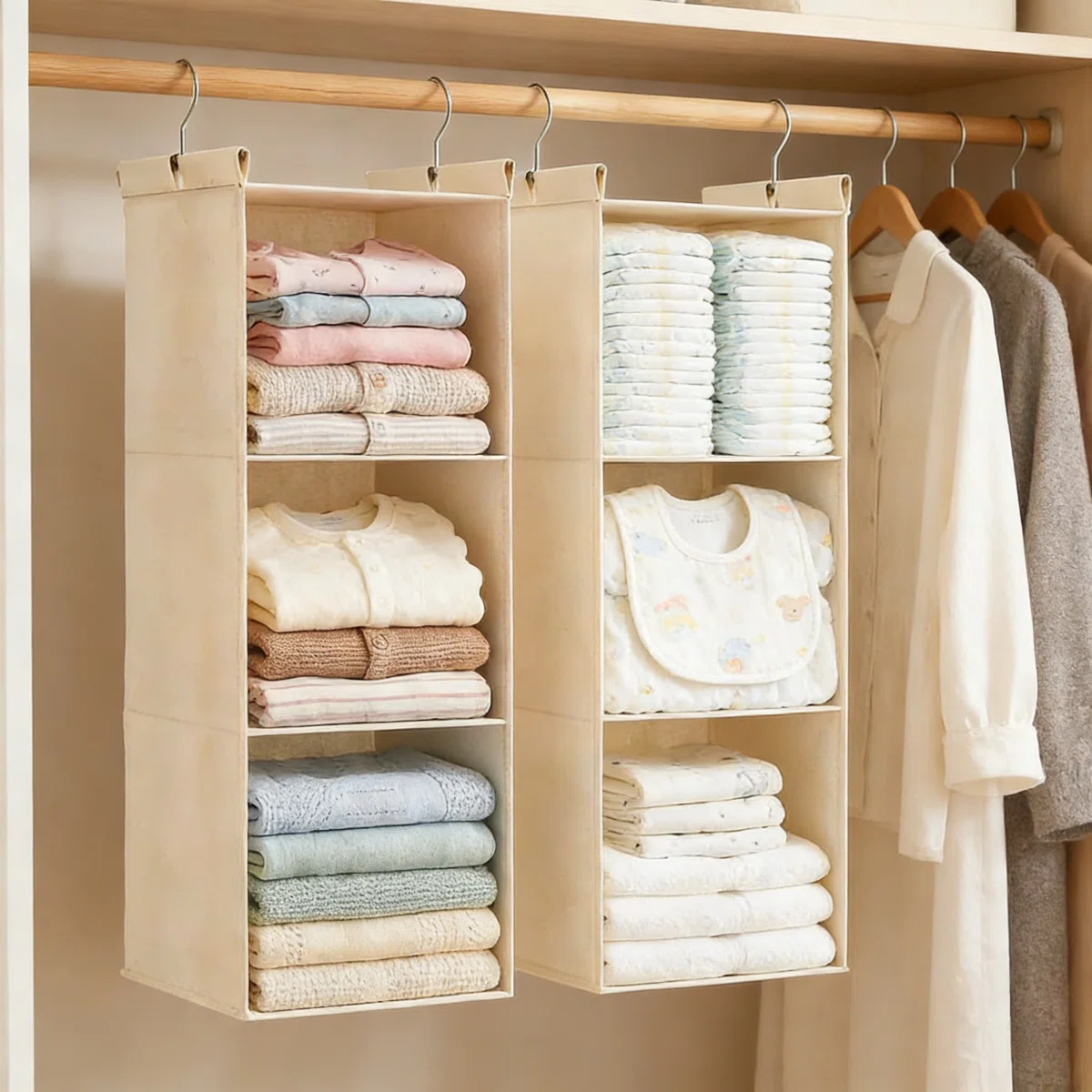
A closet shelf that bows in the middle is already telling you something: the span, load, fasteners, or shelf material is struggling. Sagging closet shelves rarely straighten themselves once the material has taken a permanent bend.
The best fix is to reduce the unsupported span and transfer more weight into solid framing. Reinforcing early is cheaper and easier than rebuilding a shelf after it pulls away from the wall.
Why Closet Shelves Start to Sag
Long shelves bend more easily because the center sits farther from the supports. Particleboard and thin MDF are especially vulnerable when loaded with folded clothes, storage bins, books, or other dense items.
Moisture can make the problem worse. A shelf that has absorbed humidity may lose stiffness, particularly around screw holes and exposed edges. General publishing reference material can be useful when researching household projects, but the shelf itself should determine the repair method.
Check the Shelf Before Adding Supports
Remove the stored items and inspect underneath. Look for splitting, crumbling screw holes, loose brackets, damaged cleats, or permanent bowing.
A shelf that is structurally damaged may need replacement rather than reinforcement. Adding brackets to badly deteriorated particleboard can create several strong attachment points around material that is still too weak.
Reduce the Unsupported Span
Adding a center bracket is one of the simplest ways to stiffen a long shelf. The bracket should ideally connect to a wall stud or another reliable structural support.
For wide closets, two intermediate brackets may distribute the load better than one. People collecting personal organization ideas sometimes focus on containers and layouts, yet basic shelf support matters more than decorative storage accessories.
| Problem | Likely Cause | Practical Fix |
|---|---|---|
| Center bow | Long unsupported span | Add center support |
| Loose edge | Weak fastening | Secure into framing |
| Crumbling board | Material failure | Replace shelf |
| Repeated sagging | Excessive load | Reduce stored weight |
Strengthen the Front Edge
A shelf can become considerably stiffer when a solid wood strip is attached vertically along its front edge. This creates a deeper structural profile that resists bending better than a flat board alone.
The reinforcing strip must be secured properly rather than treated as decorative trim. When comparing repair approaches through digital reading sources, keep the physical principle simple: deeper and better-supported shelf edges generally resist flexing more effectively.
Consider Replacing Weak Material
If an inexpensive shelf has already developed a severe permanent curve, replacement may be cleaner than trying to force it flat. Plywood or appropriately sized solid wood can offer better stiffness for demanding storage applications.
Thickness alone doesn’t solve every problem. Even a stronger board can sag across an excessive span without enough support.
Control What Goes Back on the Shelf
Once the shelf is reinforced, don’t immediately reload it exactly as before. Put heavier items near brackets or wall supports and reserve the center for lighter clothing or linens.
Large storage bins can hide surprising weight. Several containers filled with documents, tools, shoes, or miscellaneous household items may place much more stress on a shelf than their appearance suggests.
Where Reinforcement Can Fail
One common mistake is attaching additional brackets only to drywall. The shelf may look stronger at first, but the fastener can loosen as repeated downward force works against the wall material.
Another mistake is reinforcing a damaged shelf without reducing its load. Support hardware has limits, and weak shelf material can still fail between brackets. Fix the support pattern and the storage habits together.
Frequently Asked Questions
Can a sagging closet shelf be straightened?
Minor flex may disappear after unloading, but a shelf with a permanent bend often stays distorted. Reinforcement may prevent additional sagging, while severe deformation usually makes replacement the cleaner solution.
How far apart should closet shelf supports be?
The appropriate spacing depends on shelf material, thickness, depth, load, and bracket design. Follow the shelf or hardware manufacturer’s guidance and reduce unsupported spans when storing heavier items.
Should heavy storage bins go in the center?
Usually not. Placing heavier items closer to properly secured supports reduces bending stress across the center of the shelf. Lighter belongings are generally better suited to the longest unsupported portions.
Strengthen the Weak Point First
A bowed shelf is easier to correct before fasteners loosen or the board cracks. Empty the shelf, identify whether the weakness comes from the material, span, or mounting, and reinforce the actual failure point rather than adding hardware randomly.
A small structural improvement now can prevent a much messier closet collapse later.







Leave a Reply