

Effective wound fluid management depends not only on how much exudate a dressing can absorb, but also on how well that fluid stays contained afterward.
When comparing dressings for moderate to highly exuding wounds, absorption capacity is often the first specification people notice.
But taking fluid into a dressing is only one part of wound exudate management. Once absorbed, that fluid also needs to remain contained within the dressing rather than moving back toward the wound or reaching the dressing edge.
This difference between absorption and retention is central to the design of the Dimora MegaSorb™ Silicone Foam Dressing range and its MegaSorb™ Dual-Action Absorption System.
Absorption and Retention Are Not the Same Thing
Absorption describes how much wound exudate a dressing can take in.
Retention describes what happens next: how effectively the absorbed fluid stays within the dressing after it has entered the absorbent structure.
A dressing may have high absorption capacity, but if fluid is not retained effectively, pressure from movement, sitting, lying down, or repositioning may allow moisture to move toward the wound-facing surface or the dressing edge.
For moderate to highly exuding wounds, both functions therefore matter.
Effective fluid management requires a dressing to absorb fluid and keep it there.
Why Retention Matters After Fluid Is Absorbed
Once wound exudate enters a dressing, keeping it contained can help address two practical concerns: backflow and leakage.
Backflow occurs when absorbed fluid moves back toward the wound-facing side of the dressing. Leakage occurs when fluid travels toward or beyond the dressing edge.
Both can reduce the practical value of high absorption capacity.
This is why judging a wound dressing only by the amount of fluid it can absorb can give an incomplete picture. A more useful question is:
How well does the dressing retain the fluid after absorption?
How the MegaSorb™ Dual-Action Absorption System Works
Dimora MegaSorb™ is designed around two connected stages of wound exudate management.
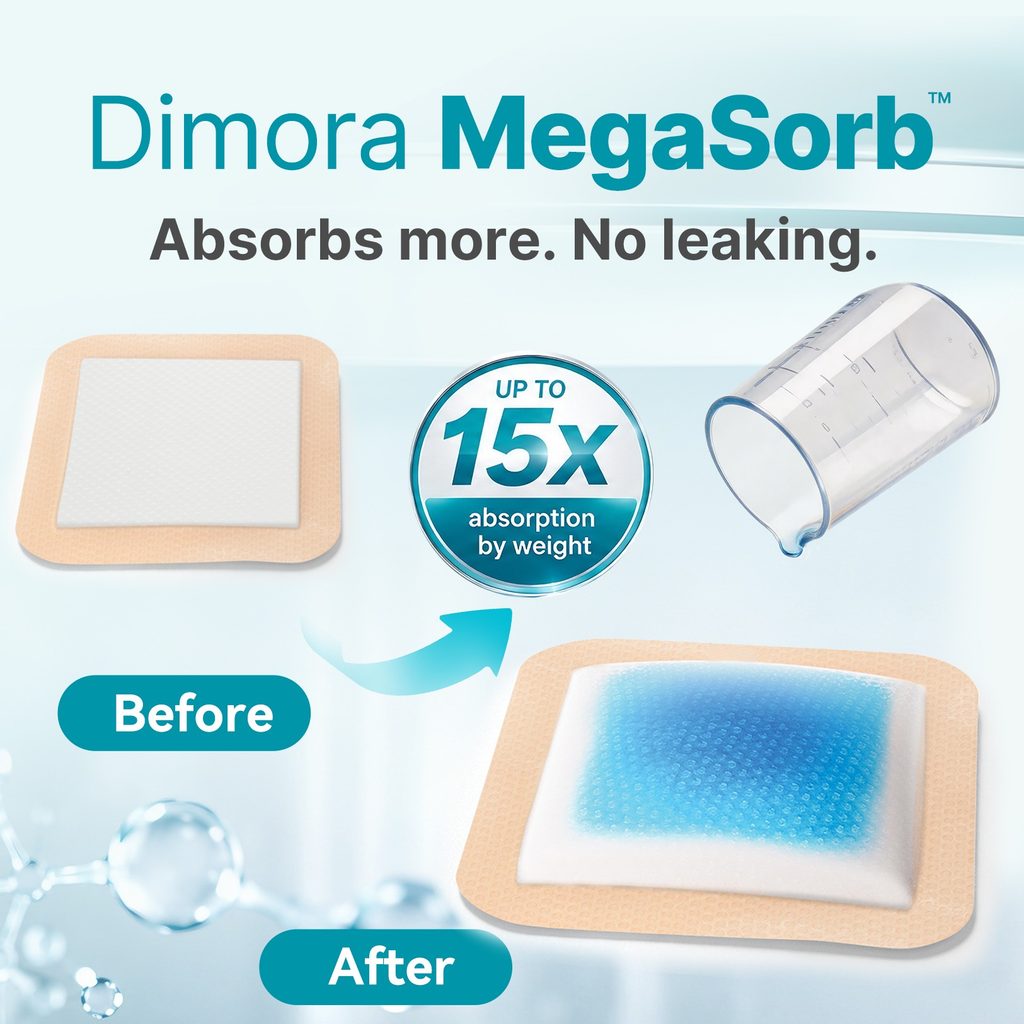
Action 1: Absorb Wound Exudate
The first stage focuses on drawing fluid into the absorbent foam structure.
Dimora MegaSorb™ Silicone Foam Dressing can absorb up to 15 times its own weight in wound exudate, providing fluid-handling capacity for moderate to highly exuding wound-care situations.
Action 2: Retain Absorbed Fluid
The second stage focuses on keeping that absorbed fluid contained inside the dressing.
The MegaSorb™ system is designed to stabilize and retain wound exudate within the absorbent structure, helping reduce the risk of fluid moving back toward the wound area or escaping toward the dressing edge.
Together, these two actions form the MegaSorb™ Dual-Action Absorption System:
Absorb fluid → retain fluid.
The distinction is simple, but it changes how dressing performance should be evaluated.
What This Means for the Skin Around the Wound
Fluid containment can also matter for the surrounding skin.
When wound exudate spreads beyond the wound area and remains in prolonged contact with nearby skin, excess moisture may contribute to maceration, in which the skin becomes overly moist or softened.
A dressing designed to draw exudate into its absorbent structure and help keep it there can help limit unnecessary fluid contact with the surrounding area.
This does not replace regular wound observation or professional wound-care guidance, but it is an important consideration when managing ongoing drainage.
Other Layers Support the Fluid-Management System
Absorption and retention form the core of the MegaSorb™ system, but other dressing layers also contribute to everyday performance.
A medical-grade silicone contact layer is designed to support secure placement while allowing gentler removal during dressing changes.
Dimora silicone foam dressing also uses a waterproof, breathable PU film outer layer designed to help block external moisture and contaminants while maintaining breathability.
Together, these layers complement the absorbent core by addressing skin contact and external protection during wear.
One Fluid-Management Platform Across the MegaSorb™ Range
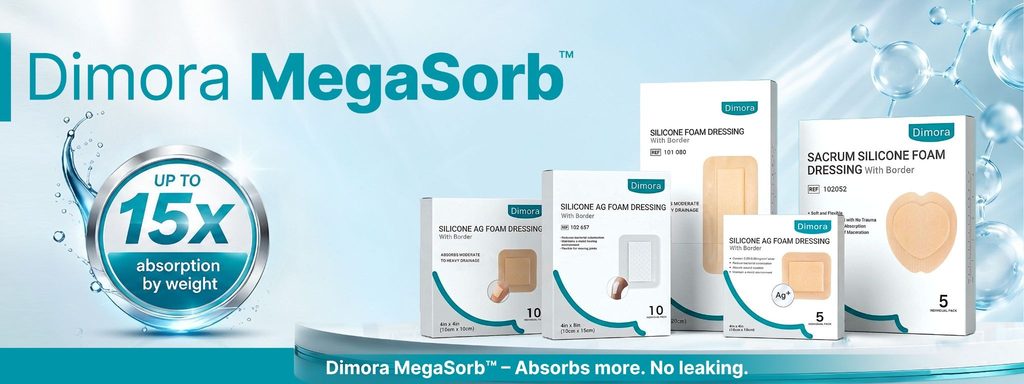
The MegaSorb™ Dual-Action Absorption System is shared across Dimora’s silicone foam dressing range.
The Square Silicone Foam Dressing provides a versatile format for a range of wound-care situations.
The Sacral Silicone Foam Dressing applies the same absorption and retention approach in a shape designed for the sacral area.
The Silver Silicone Foam Dressing is intended for specific wound-care situations where antimicrobial management may be considered and should be selected according to product instructions and professional guidance.
Although the formats serve different care scenarios, they share the same underlying principle: wound fluid should be both absorbed and retained.
Looking Beyond the Absorption Number
For moderate to highly exuding wounds, absorption capacity is only part of the story. What matters just as much is how effectively the dressing retains wound exudate after it has been absorbed.
Powered by MegaSorb™ technology and its Dual-Action system, Dimora MegaSorb™ Silicone Foam Dressing combines up to 15X absorption by weight with fluid retention, helping keep absorbed exudate within the dressing and reduce the risk of leakage and backflow.
By combining absorption and retention in one system, MegaSorb™ supports more complete wound exudate management and helps Make Home Care Easy.









Leave a Reply