

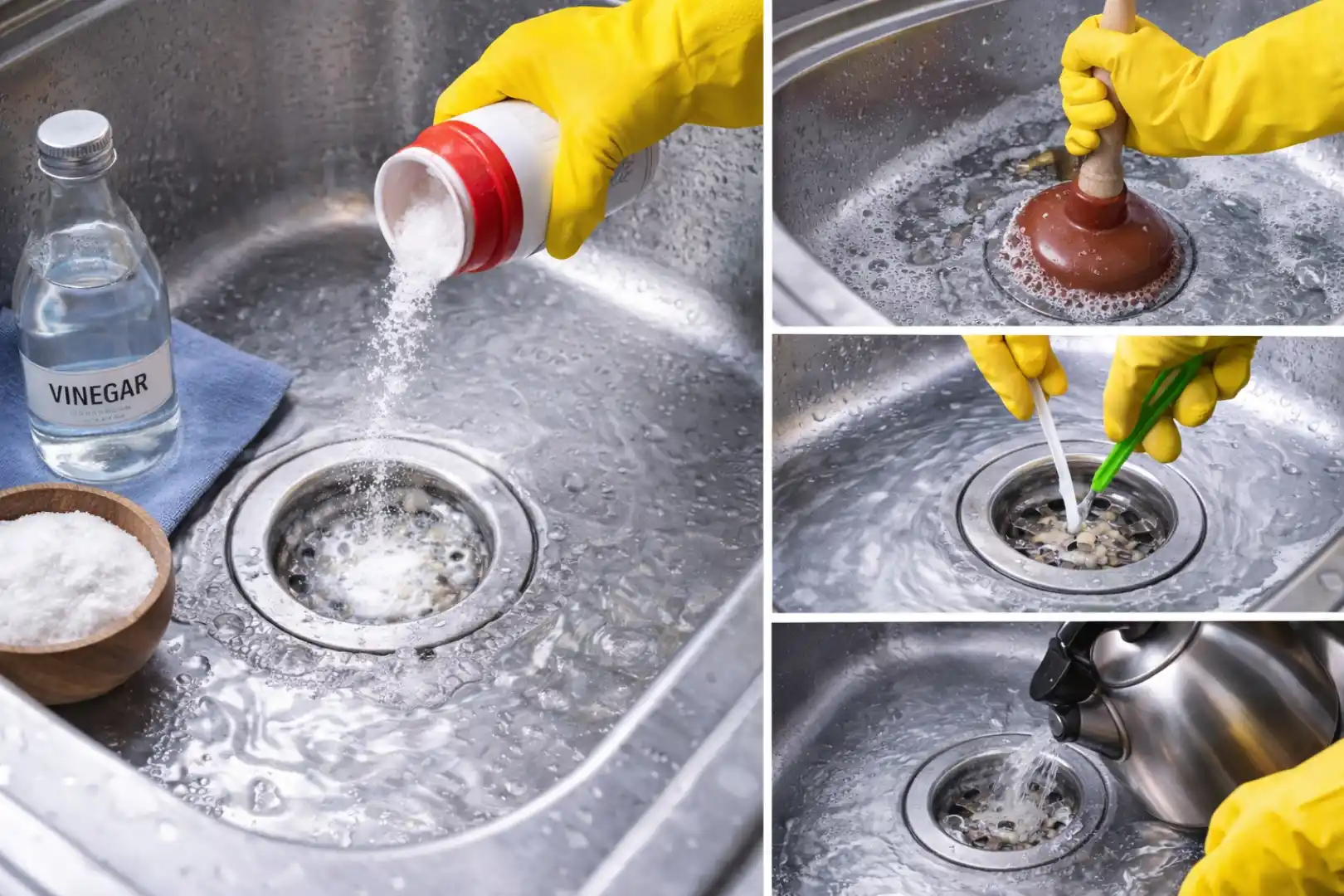
A drain that empties more slowly than normal is often an early warning that debris is narrowing the pipe. Slow drain problems are easier to handle before water stops moving completely. Start with simple mechanical cleaning, watch how the drain responds, and avoid forcing aggressive chemicals into a plumbing system you haven’t inspected.
Find Out Where the Slowdown Starts
Check whether only one fixture is draining slowly or several drains are affected. A single slow bathroom sink often points to buildup near that fixture, while several sluggish drains can suggest a blockage farther along the plumbing system.
Run water briefly and watch what happens. Gurgling, rising water, or drainage that becomes slower over several days gives useful clues about where resistance may be developing.
| Drain Behavior | Possible Cause | First Check |
|---|---|---|
| One sink drains slowly | Local debris | Stopper and trap |
| Water backs up quickly | Dense blockage | Nearby pipe section |
| Several drains are slow | Deeper restriction | Shared drain line |
| Drain gurgles | Restricted airflow | Vent or drain issue |
Remove Easy Blockages First
Start by taking out visible hair, soap residue, food particles, or other material near the drain opening. A plastic drain-cleaning strip or small hand tool can often pull out buildup without damaging the pipe.
Keep towels nearby and wear gloves before opening plumbing parts. People organizing routine repairs sometimes keep notes alongside general references such as home maintenance planning, which can make recurring household problems easier to track.
For bathroom drains, remove the stopper if it comes out easily. Hair can wrap around the stopper assembly and create a surprisingly dense obstruction even when the pipe below remains open.
Clean the Trap If the Drain Stays Slow
Place a bucket beneath the P-trap before loosening it. The curved section of pipe normally holds water, so opening it without a container underneath can create a quick mess.
After removal, clear any sludge or solid debris and rinse the trap before reinstalling it. General household organization resources such as practical home setup tips can also be useful when you’re building a basic repair area with buckets, gloves, and simple hand tools.
Tighten slip nuts securely by hand, then test for leaks. Avoid overtightening plastic fittings because excessive force can distort washers or crack older components.
Work Deeper Only After Simple Checks
If the trap is clear but drainage remains poor, a hand-operated drain snake may reach material farther inside the pipe. Feed it gradually and turn the cable as directed rather than forcing it through resistance.
Some homeowners pair plumbing maintenance with broader room maintenance ideas so small drainage changes are noticed before they become disruptive. The important part is responding to a pattern instead of waiting for standing water.
Never mix different chemical drain cleaners. Combining products can create dangerous fumes or reactions, and chemical residue can also make later hands-on work hazardous.
Common Mistakes That Make Slow Drains Worse
Pouring stronger chemicals into every slow drain is not always the fastest answer. The obstruction may be hair, grease, a foreign object, or a problem farther down the line that chemicals cannot reliably remove.
Repeated plunging can also be ineffective if the blockage is beyond the fixture trap. Another common mistake is ignoring several slow drains at once. That pattern deserves more attention because it may involve a shared drain rather than one dirty sink.
Frequently Asked Questions
Can boiling water clear a slow drain?
Hot water may soften some soap or greasy residue, but boiling water is not suitable for every pipe material. Mechanical removal is often more predictable, especially when hair or solid debris is causing the restriction.
Why does my drain become slow again after cleaning?
Recurring slow drainage usually means some buildup remains, material is collecting repeatedly, or the obstruction is deeper than the section you cleaned. Recheck the stopper, trap, and accessible line.
When should I call a plumber for a slow drain?
Professional help makes sense when multiple fixtures drain slowly, sewage odors appear, water repeatedly backs up, or basic cleaning and snaking do not restore normal flow.
Stop the Blockage Before It Grows
A slow drain is easier to manage while water still moves through the pipe. Remove visible debris, inspect the trap, and move deeper only when the simpler checks fail. If several fixtures begin showing the same problem or water starts backing up repeatedly, treat it as a larger drainage issue rather than continuing to clear one fixture at a time.








Leave a Reply