

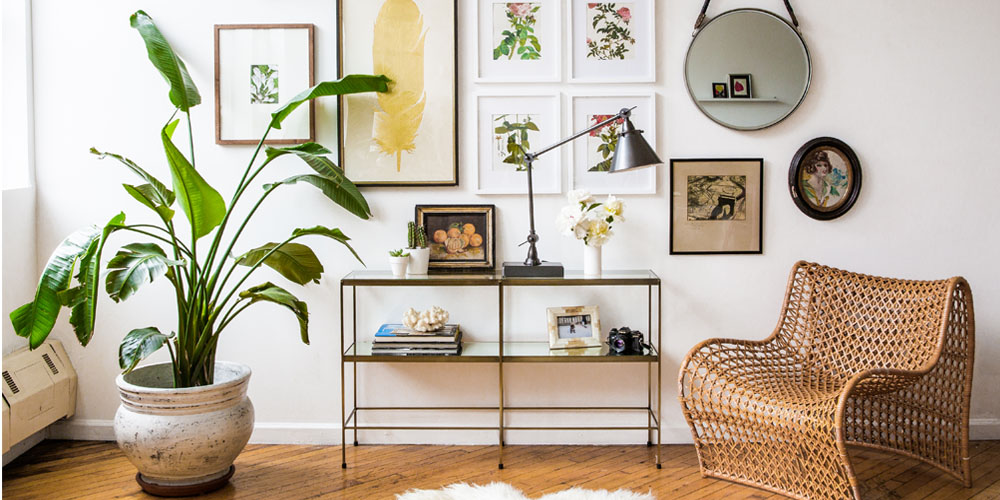
A blank wall can make an otherwise finished room feel strangely incomplete. The solution isn’t filling every inch. Empty wall spaces look better when a few intentional elements create rhythm, proportion, and personality without making the room feel visually crowded.
The strongest approach usually starts with scale. One well-chosen feature often works better than six unrelated decorations competing for attention.
Start With the Wall’s Proportion
Before adding anything, look at the wall in relation to nearby furniture. A narrow wall beside a doorway needs a different treatment than a wide wall above a sofa.
Large surfaces often benefit from one dominant piece. Smaller areas usually look cleaner with compact artwork, a mirror, or a restrained decorative object.
Let Furniture Guide Placement
Wall decor should feel connected to what sits below it. Art floating too high above a console can seem disconnected, while pieces squeezed tightly against furniture feel cramped.
Use the furniture width as a visual guide rather than treating the wall as an isolated decorating zone.
Choose One Strong Focal Element
A large framed print, textile, sculptural object, or oversized mirror can give an empty wall purpose without introducing clutter. Browsing different interior design ideas can also help you notice how successful rooms leave breathing space around important features.
The overlooked point is that blank space is part of the design. The area surrounding an object helps that object feel intentional.
| Wall Situation | Simple Choice | Main Benefit |
|---|---|---|
| Above a sofa | Large artwork | Strong visual anchor |
| Narrow wall | Tall mirror | Adds height |
| Wide hallway | Small grouped prints | Creates rhythm |
| Empty corner wall | Sculptural piece | Adds depth |
Use Texture Instead of More Objects
Interest doesn’t always require additional items. Wood panel details, limewash-style finishes, subtle wallpaper, molding, or woven hangings can introduce depth while keeping the wall visually calm.
That idea works especially well in rooms where furniture, textiles, and accessories already provide plenty of detail. Inspiration from comfortable home spaces can be useful when balancing decorative character with a restful atmosphere.
Keep Texture Controlled
A textured feature should support the room rather than become another competing layer. If the furniture is patterned or colorful, choose quieter wall texture.
In a minimal room, slightly stronger texture can create personality without relying on shelves full of accessories.
Bring Natural Elements Into the Composition
Plants, botanical shapes, and materials inspired by outdoor settings can soften an unused wall. A hanging planter, slim plant stand, or framed natural material adds character without covering the entire surface.
Homes with strong indoor-outdoor connections often borrow ideas from outdoor design inspiration by repeating stone tones, wood textures, greenery, or organic shapes inside.
Avoid Filling Space for the Sake of Filling It
One common mistake is assuming every visible wall needs decoration. It doesn’t. Filling small gaps with random frames, signs, baskets, clocks, and shelves can quickly make a room feel busier than before.
Another problem is choosing objects that are too small for the wall. Several tiny pieces may create more visual noise than one appropriately scaled feature.
Frequently Asked Questions
How much empty wall space should a room have?
There is no fixed percentage. Leave enough open wall area for major decorative pieces to stand apart visually. Rooms usually feel calmer when every surface isn’t occupied.
Should every wall have artwork?
No. Leaving one or more walls relatively quiet can make decorated walls more noticeable and prevent the room from feeling overloaded.
Are gallery walls still suitable for small spaces?
Yes, but keep the grouping controlled. A compact arrangement using related frames, colors, or artwork usually feels cleaner than a large collection of unrelated pieces.
Make the Empty Space Work for the Room
Treat unused wall area as breathing room rather than a decorating problem. Start with scale, connect decorations to nearby furniture, and choose texture or one strong feature before adding multiple smaller objects.
The goal isn’t to eliminate every blank surface. It’s to make the room look finished while preserving enough open space for the design to feel comfortable.

Leave a Reply