

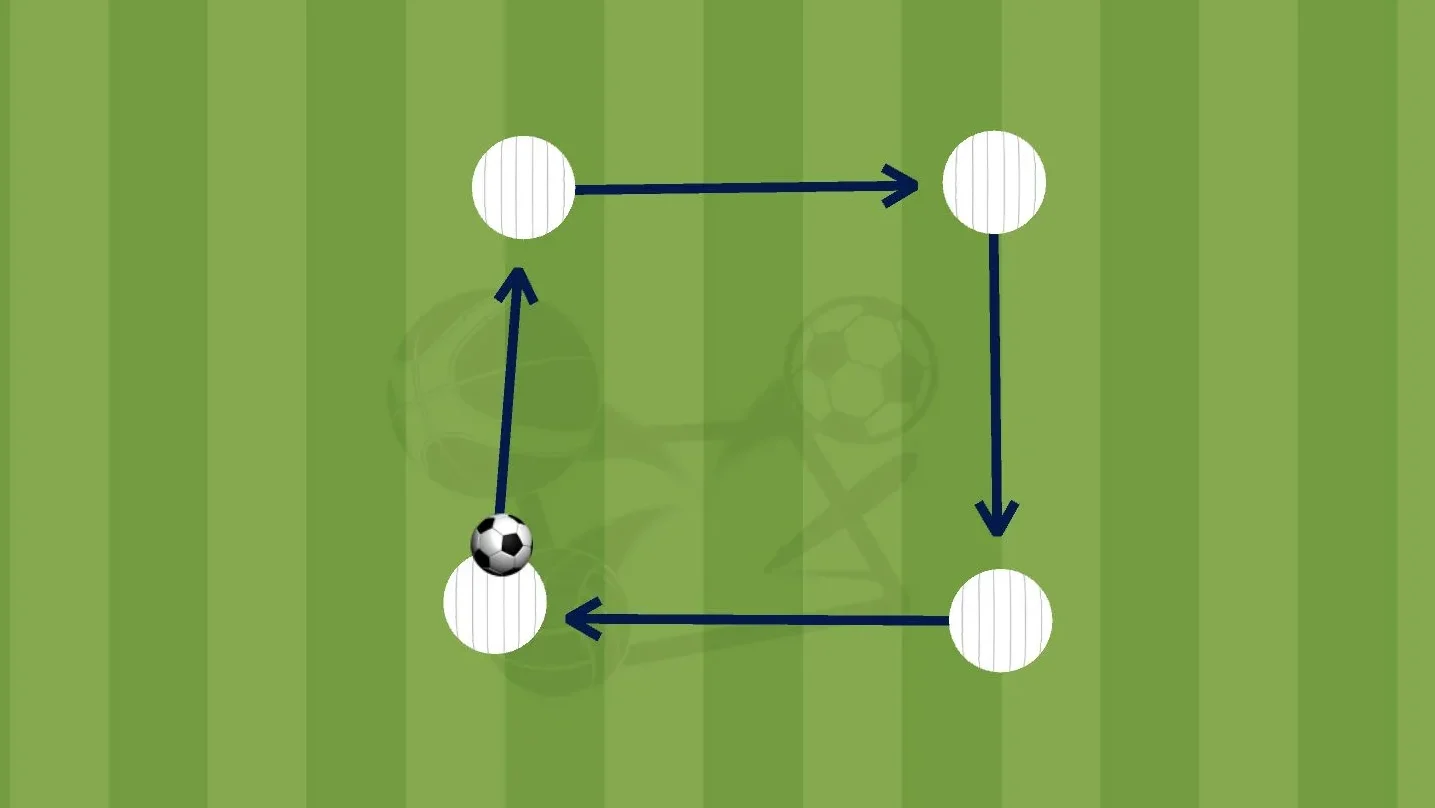
Accurate passing comes from repeatable technique, not from trying to strike the ball harder. Weak passing accuracy often improves when players slow the movement down, correct their body position, and repeat simple passes until clean contact becomes automatic. Consistent practice also helps players judge distance and weight more reliably.
Why Passing Accuracy Breaks Down
Most inaccurate passes start before the foot reaches the ball. Poor balance, a planted foot pointing away from the target, or rushed decision-making can send an otherwise simple pass off line.
Watch the ball through contact while keeping the ankle firm. Players exploring broader football training ideas can still benefit most from mastering these basic mechanics before adding complicated drills.
Build a Repeatable Passing Motion
Place the non-kicking foot beside the ball and point it toward the intended target. For a standard short pass, use the inside of the foot and guide the leg through the center of the ball.
The goal isn’t maximum force. A smooth action makes it easier to repeat the same technique under pressure.
Use Repetition Without Practicing Mistakes
Repetition only helps when the movement being repeated is sound. Start five to ten yards from a wall or training partner and focus on sending the ball back to the same area each time.
General team sports resources may offer plenty of practice inspiration, but a simple passing drill becomes more useful when players track how many controlled passes they can complete consecutively.
| Practice Focus | Useful Drill | Main Benefit |
|---|---|---|
| Short accuracy | Wall passing | Cleaner contact |
| Pass weight | Partner passing | Better distance control |
| First touch | Receive and return | Faster preparation |
| Direction | Target gates | Improved precision |
Add Movement to Make Practice More Realistic
Stationary passes are useful at first, but matches rarely stay still. Once technique feels reliable, receive the ball while moving and pass after one or two touches.
Use cones to create passing gates at different angles. Material covering football tactics and technique can complement practice, but players should still make each drill measurable by counting successful passes through the chosen target.
Train Both Feet
A player who can only pass comfortably with one foot becomes easier to defend. Spend dedicated repetitions on the weaker side even when the passes initially feel awkward.
Keep the distance short until accuracy improves. Increase range gradually instead of forcing difficult passes too early.
Practice Passing Under Faster Decisions
Accuracy changes when a player must look up, choose an option, and release the ball quickly. Add a scanning habit by checking the area before receiving.
A partner can call a target number or direction just before the first touch. This forces the player to process information instead of repeating a memorized movement.
Where Passing Practice Often Goes Wrong
Players sometimes assume hundreds of careless passes will automatically create improvement. They won’t. Repeating poor foot placement or leaning backward can make an inaccurate pattern more familiar rather than correcting it.
Another mistake is starting with long passes before short control is dependable. Distance magnifies technical errors. Build accuracy close to the target, then expand the range while keeping the same balanced movement.
Frequently Asked Questions
How often should I practice passing?
Short sessions several times each week can be more productive than one long session. Even 15 to 20 focused minutes allows plenty of controlled repetitions without letting fatigue damage technique.
Should I look at the target or the ball?
Check the target before passing, then watch the ball closely during contact. With practice, players learn to scan early without losing clean striking technique.
Can wall passing improve match performance?
Yes, especially for first touch, timing, and quick returns. Add different distances, angles, and one-touch repetitions so the drill doesn’t become too predictable.
Make Every Pass Deliberate
Passing improves fastest when every repetition has a clear target and technical purpose. Start close, correct the contact point, then add movement, pressure, and longer distances gradually. Track successful passes rather than total attempts. Cleaner practice builds a technique that remains dependable when match speed increases.










Leave a Reply