

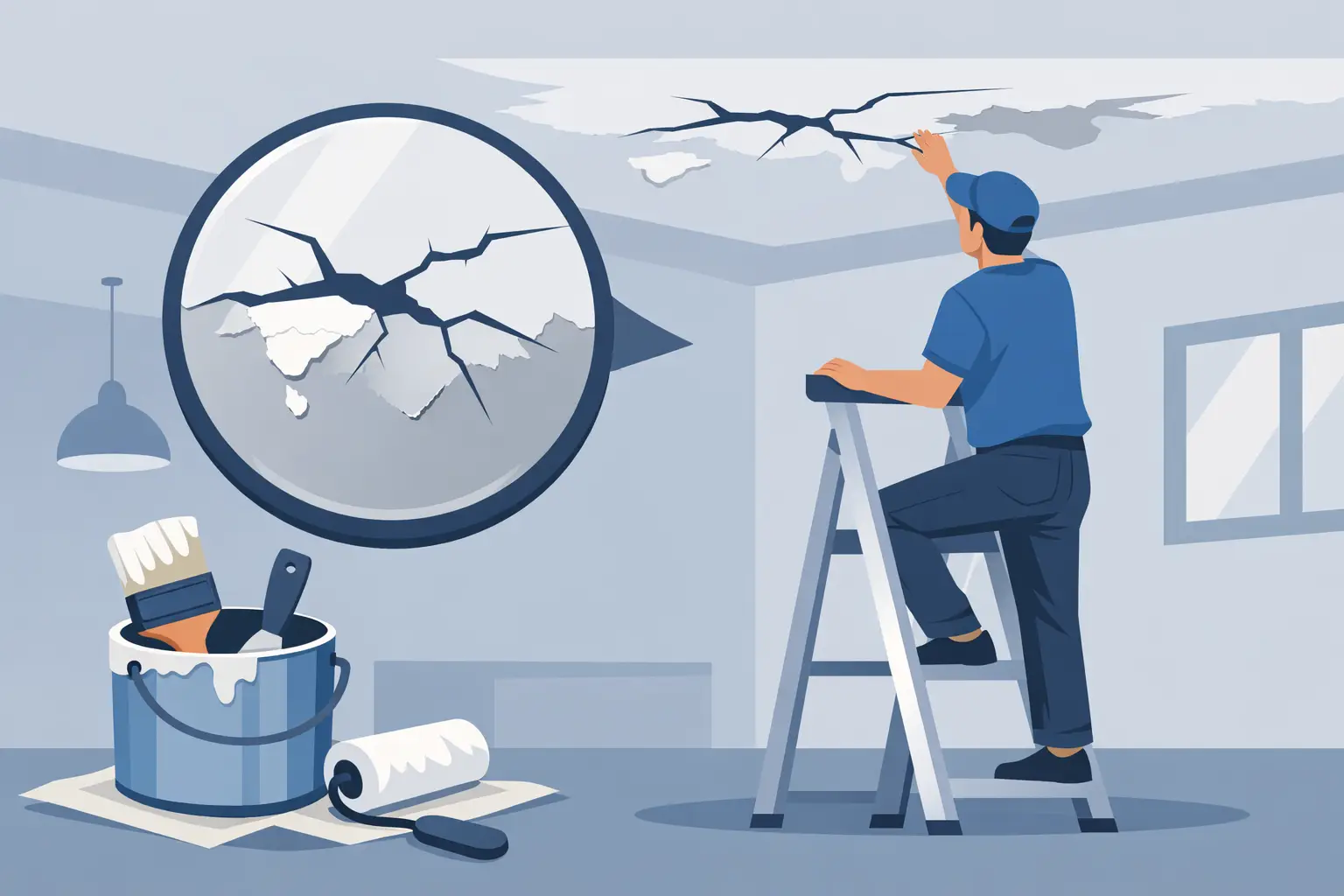
Cracked ceiling paint is often treated as a cosmetic problem, but repainting too quickly can hide the real cause rather than fix it. Moisture, poor surface preparation, aging paint, temperature changes, and movement in the ceiling material can all create cracks. Before reaching for a paint roller, identify what is happening underneath.
Why Does Ceiling Paint Start Cracking?
Paint can crack when its bond with the surface weakens. Older coatings may become brittle, while thick layers applied over many years can eventually split or peel.
Moisture deserves special attention. A leaking roof, plumbing line, bathroom above the ceiling, or persistent condensation can introduce enough water to weaken paint and drywall. Homeowners reviewing home maintenance context should remember that the visible crack may be several feet away from the actual source of a leak.
Look Beyond the Paint Surface
Check whether the ceiling feels soft, looks discolored, or has brown or yellow rings. Those clues can point toward water intrusion rather than ordinary paint aging.
A narrow dry crack without staining may instead come from normal building movement, joint-compound failure, or an improperly prepared surface.
Check for Moisture Before Making Repairs
Start by examining the room above the damaged ceiling, if there is one. Bathrooms, laundry rooms, plumbing fixtures, and HVAC equipment are common places to investigate.
Also inspect the roof after heavy rain if the ceiling is directly beneath an attic. Practical homeowner reading can provide broader ideas about property upkeep, but physical inspection is what helps narrow down the cause in your own home.
| Ceiling Clue | Possible Cause | Useful Next Step |
|---|---|---|
| Brown staining | Water intrusion | Trace plumbing or roof leaks |
| Fine dry cracks | Aging paint | Inspect coating condition |
| Peeling patches | Poor adhesion | Remove loose material |
| Soft drywall | Ongoing moisture | Repair source before painting |
Prepare the Ceiling Only After the Cause Is Fixed
Once you are confident the ceiling is dry and the underlying problem has been corrected, remove loose or flaking paint with a scraper. Avoid aggressively digging into intact drywall.
Small imperfections can usually be filled with appropriate patching compound, allowed to dry, and sanded smooth. Broader repair planning ideas may be useful when organizing multiple maintenance jobs around the home, especially if the ceiling problem is part of a larger renovation.
Primer Matters More Than Many People Expect
Applying fresh paint directly over exposed compound, staining, or repaired drywall can produce uneven results. A suitable primer helps create a consistent surface and improves paint adhesion.
If old water stains remain after the moisture problem is solved, a stain-blocking primer may be needed to stop discoloration from showing through the finish coat.
Where a Quick Repaint Usually Goes Wrong
One common mistake is sanding the crack, adding paint, and assuming the problem is finished. If moisture remains, new bubbling, staining, or peeling may appear within a short period.
Another mistake is applying thick coats to hide surface defects. Extra paint doesn’t strengthen damaged drywall or failing joint compound. It can create another brittle layer that eventually cracks. Repair should address the substrate first and appearance second.
Frequently Asked Questions
Can ceiling paint crack without a water leak?
Yes. Paint can crack because of age, poor preparation, thick previous coatings, temperature changes, or movement where drywall joints meet. Moisture is important to rule out, but it isn’t the only possible explanation.
Should I paint over small ceiling cracks?
Inspect them first. A stable cosmetic crack may need cleaning, filling, sanding, priming, and repainting. Continually expanding cracks or cracks accompanied by sagging deserve closer investigation before cosmetic repairs begin.
Why does ceiling paint keep peeling after repainting?
Recurring peeling often means the underlying cause wasn’t corrected. Moisture, contamination, incompatible coatings, poor primer selection, or a weak previous paint layer can prevent the new finish from bonding properly.
Fix the Cause Before Restoring the Finish
A clean coat of paint can make a ceiling look new again, but it shouldn’t be the first step. Trace moisture, inspect the drywall, remove unstable material, and prepare repaired areas correctly. If water intrusion or significant structural movement is suspected, deal with that problem first. A little investigation before painting can prevent the same crack from returning.











Leave a Reply