

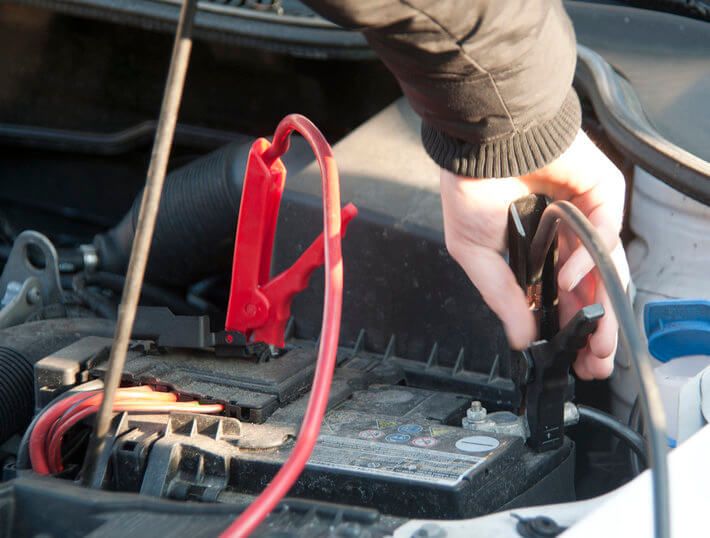
A battery that keeps going flat doesn’t always need replacement. Dead battery problems can start with the battery itself, but they can also come from poor connections, an alternator that isn’t charging correctly, or an electrical draw while the vehicle is parked.
Testing the complete charging system first can prevent replacing a usable battery while leaving the real fault untouched.
Start With the Battery’s Actual Condition
A weak battery may crank the engine slowly, cause rapid clicking from the starter relay, or leave electrical accessories working while the engine refuses to turn over. Age matters, but age alone doesn’t prove the battery has failed.
Inspect the case for swelling, leakage, loose terminals, and heavy corrosion. Cleaning and tightening connections can sometimes restore normal starting because resistance at the terminals prevents available battery power from reaching the starter.
Check Voltage Under Load
Resting voltage provides limited information. A battery can appear reasonably charged without being able to supply enough current during cranking.
A proper load or conductance test gives a clearer picture. Drivers researching broader engine and vehicle maintenance topics should still treat battery testing as a separate diagnostic step rather than assuming replacement is automatically required.
Make Sure the Alternator Is Charging
Once the engine starts, the alternator supplies electrical power and replenishes energy removed from the battery. If charging output is too low, a new battery may eventually become discharged just like the old one.
A technician can measure charging voltage and alternator current while checking whether output changes under electrical load. Headlights, the blower motor, heated glass, and other accessories can expose a charging weakness that isn’t obvious at idle.
For drivers comparing routine automotive troubleshooting, checking alternator performance is especially important when a battery repeatedly needs jump-starting.
| Check | Possible Finding | What It Suggests |
|---|---|---|
| Battery terminals | Corrosion or looseness | High resistance |
| Battery load test | Weak output | Internal battery wear |
| Charging test | Low alternator output | Charging system fault |
| Key-off current test | Excessive draw | Parasitic drain |
Look for Power Drains While Parked
A battery that works normally during the day but is dead the next morning may have a parasitic electrical drain. Interior lights, aftermarket electronics, faulty control modules, or wiring problems can continue using power after the ignition is switched off.
Some modules remain awake briefly after parking, so testing immediately can produce misleading results. Electrical systems often need time to enter sleep mode before an accurate key-off current test can be performed.
Resources covering vehicle electrical systems can provide useful background, but an actual drain must be measured on the affected vehicle.
Check the Cables and Ground Connections
Battery cables carry high current during starting, which makes resistance especially important. A cable can look acceptable from the outside while corrosion develops beneath insulation or inside a terminal connection.
Voltage-drop testing while the starter operates can reveal resistance on both the positive and ground sides. Engine-to-body ground straps deserve attention because a weak ground can imitate battery or starter trouble.
Why Replacing the Battery First Can Fail
Installing a new battery may temporarily make the vehicle start normally, leading the owner to believe the problem is solved. If the alternator isn’t charging or something continues drawing power overnight, the same failure can return.
Repeatedly replacing batteries also adds unnecessary expense. Diagnosis should establish whether the battery cannot store energy, isn’t receiving adequate charge, or is losing charge after the vehicle is switched off.
Frequently Asked Questions
Can a bad alternator cause a new battery to die?
Yes. If the alternator doesn’t replenish the energy used during starting and normal electrical operation, even a recently installed battery can gradually discharge.
Why does my battery die only overnight?
An overnight failure can indicate a parasitic electrical draw, a battery with poor reserve capacity, or a charging problem that leaves the battery partly discharged before the vehicle is parked.
Should battery terminals be checked before replacing the battery?
Yes. Loose or corroded terminals can restrict current and create symptoms similar to a weak battery. Cleaning, tightening, and testing the connections is a sensible early diagnostic step.
Find the Fault Before Buying Parts
A dead battery is a symptom, not a complete diagnosis. Test battery condition, charging performance, cable resistance, and key-off electrical draw before deciding what to replace.
That process takes more effort than swapping parts, but it reduces repeat failures and gives you a better chance of fixing the electrical problem the first time.













Leave a Reply